
2026 in review: the changes that matter to touch display buyers
Not every industry development deserves a headline. Some changes are structural and only become obvious when you look at the year as a whole. This roundup collects the developments that affected industrial touch screens, panel PCs, digital signage and embedded hardware in 2026 — and explains what they mean for buyers planning 2027 projects.
AI PCs moved from the keynote to the factory floor
The AI PC story started in the consumer market, but its practical impact in 2026 has been in industrial hardware. Intel Core Ultra and N-series processors, AMD embedded platforms and Rockchip RK3588-class SoCs brought usable NPU performance into fanless panel PCs and box PCs. Machine builders began running vision inspection, people counting and predictive maintenance on the device instead of sending video to the cloud.
The result is a quieter, more compact architecture: one industrial panel PC can replace a display, a box PC and a separate vision controller. The constraint is thermal, not compute, which is why fanless design and heat-pipe engineering became a differentiator again.
Interactive displays settled on 4K and 20-point touch
In education and meeting rooms, 4K and 20-point touch moved from premium features to expectations. Buyers now compare anti-glare glass, pen accuracy, wireless casting and device management rather than resolution alone. The 65-inch, 75-inch and 86-inch sizes remained the volume leaders, with 98-inch growing in lecture halls and large boardrooms.
The OPS slot became the standard upgrade path. Schools and enterprises increasingly buy the panel as a long-life asset and replace the OPS PC module when the platform ages, rather than replacing the whole display.
Digital signage became a media business
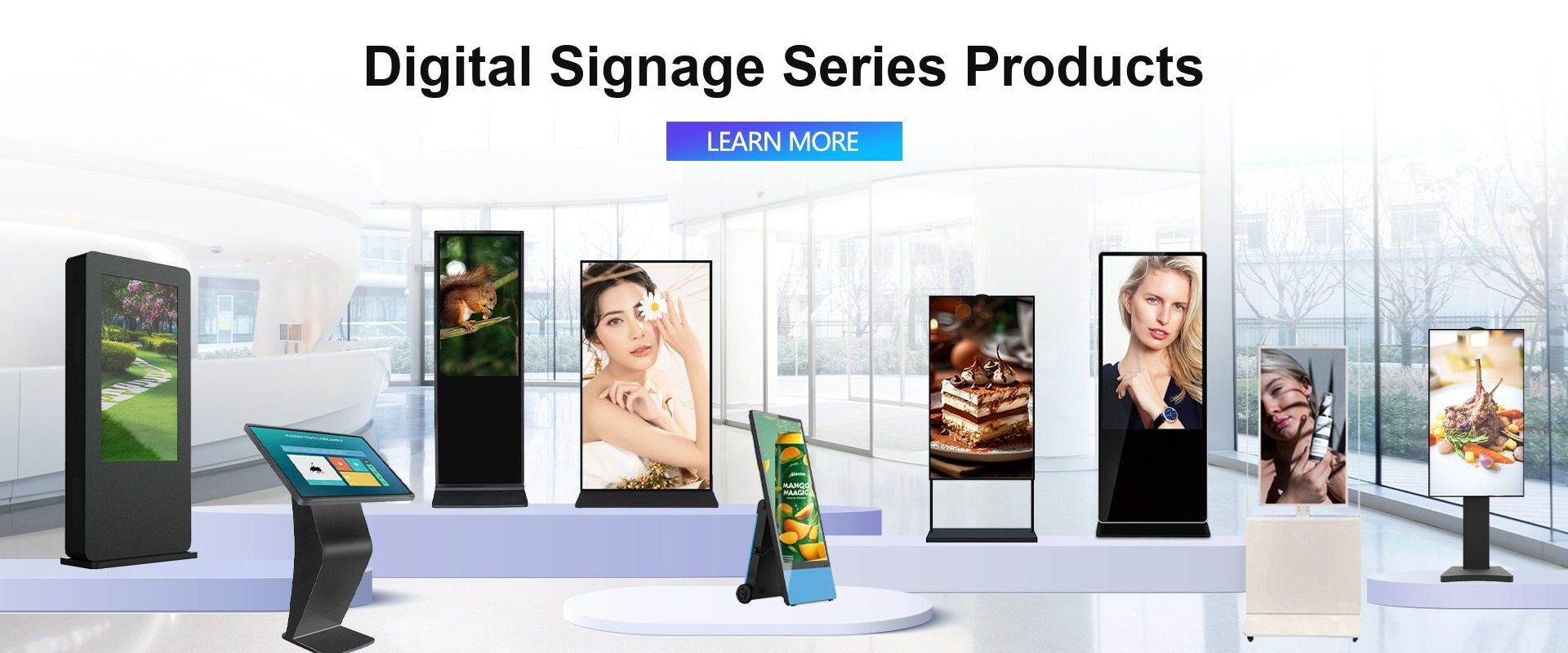
Retail media networks turned digital signage from a cost centre into an advertising channel. That changed the hardware requirements: proof-of-play, remote monitoring, consistent brightness and colour, and a player that can be updated without a site visit. Commercial-grade panels displaced consumer TVs in serious installations.
Outdoor and window-facing displays also grew, driven by drive-throughs, EV charging, fuel stations and high-street retail. The specification language stabilised around 1,000–2,500 nits, anti-glare or optical bonding, IP65/IP66 sealing and wide-temperature operation.
Supply chains became regional without leaving China
The “China plus one” strategy became normal. Buyers kept Chinese engineering and component supply, added a second assembly or stocking location closer to the end market, and asked for documented second-source plans for critical parts. Tariffs and logistics risk were managed through inventory and design choices rather than by abandoning the supply base.
For factories, this increased the value of documentation: CE, FCC, RoHS, REACH, ISO 9001, test reports, drawings and long-term availability commitments are now part of the sales conversation.
Trade shows returned to a full calendar
ISE, InfoComm, embedded world, GITEX, Bett, CES and Computex all ran full programmes in 2026. The pattern was consistent: fewer pure hardware launches, more integrated demonstrations. Exhibitors showed complete solutions — a display, a player, software and a management platform — rather than a bare panel.
The 2027 calendar is already taking shape: CES in January, Bett in London in January, ISE in Barcelona in February, embedded world in Nuremberg in March, and InfoComm in Las Vegas in June. Our trade show guide lists the confirmed dates.
Touch technology kept specialising
Projected capacitive touch consolidated its position from 7 to 32 inches, driven by sealed fronts, glove support and multi-touch. Infrared remained dominant above 43 inches and in retrofit overlays. Resistive touch held its place in low-cost industrial control and pen-based devices.
The interesting change was in the controller, not the sensor: wet-finger tracking, palm rejection, glove profiles and pen support improved enough that capacitive could be used in environments that previously required resistive or infrared.
What to watch in 2027
- Edge AI as a standard option on mid-range panel PCs, not a premium SKU.
- More 5G RedCap in industrial tablets and gateways as modules become cheaper.
- Outdoor displays growing with EV charging, retail media and smart-city projects.
- Longer lifecycle commitments from suppliers as buyers standardise on fewer platforms.
- More OEM and ODM work as distributors and integrators differentiate on branding and software.
How Seabird is responding
We expanded our touch all-in-one range, added more ARM and X86 platform options, and kept the same size ladder across panel PCs, monitors, touch frames and rugged tablets. OEM and ODM projects remain the core of our business: custom size, interface, firmware, logo and packaging, with one-piece samples at factory price.
If you are planning a 2027 rollout, send us the size, environment, platform and volume. We will reply with a configuration, a drawing and a factory price within 24 hours on working days.
Frequently asked questions
What was the biggest change in 2026?
AI moved from the cloud to the edge. Panel PCs and box PCs gained enough NPU performance to run vision and analytics locally, which changed the hardware architecture for many projects.
Are interactive flat panels still growing?
Yes. Education and corporate collaboration continue to drive demand, with 65-inch to 86-inch 4K panels as the volume segment and 98-inch growing in large rooms.
Is China still the right place to source touch displays?
For most projects, yes. The component ecosystem and engineering depth remain concentrated there, while final assembly and stocking are increasingly regional.