
How to choose a touch screen supplier in China without taking unnecessary risk
China remains the most efficient place to source touch screens, panel PCs, touch frames and rugged tablets. It also contains a very wide range of suppliers, from genuine factories with in-house bonding and testing to trading companies that resell the same generic products under different names.
This checklist is based on the questions we receive from overseas buyers and on the audits we host at our factory in Huizhou. It is designed to help you separate a manufacturer from a reseller before you place a purchase order.
1. Confirm the legal entity and the factory address
Ask for the business licence, the factory address and a short video call from the production floor. A supplier that cannot show the line, the test equipment and the warehouse is probably a trader. A video call is not a perfect audit, but it filters out the obvious mismatches.
2. Ask what is made in-house
Touch displays involve several processes: touch sensor assembly, lamination and bonding, PCBA assembly, mechanical assembly, ageing and testing. A factory may outsource some of these, which is normal, but it should be transparent about which steps it controls.
At Seabird, touch frame assembly, PCBA, panel PC integration, ageing and final test are performed in-house. Bonding and lamination run in a dust-controlled area with documented process settings.
3. Review the quality control plan
Ask for the inspection points, the acceptance criteria and the records. A credible plan usually includes:
- Incoming inspection of LCD, touch sensor, controller and boards.
- In-process inspection after bonding and assembly.
- Ageing test (24–48 hours) before packing.
- 100% final inspection.
- Random out-of-box inspection before shipment.
- Traceability by serial number.
If the supplier cannot describe these steps in detail, the price is probably based on skipping some of them.
4. Verify certifications and test reports
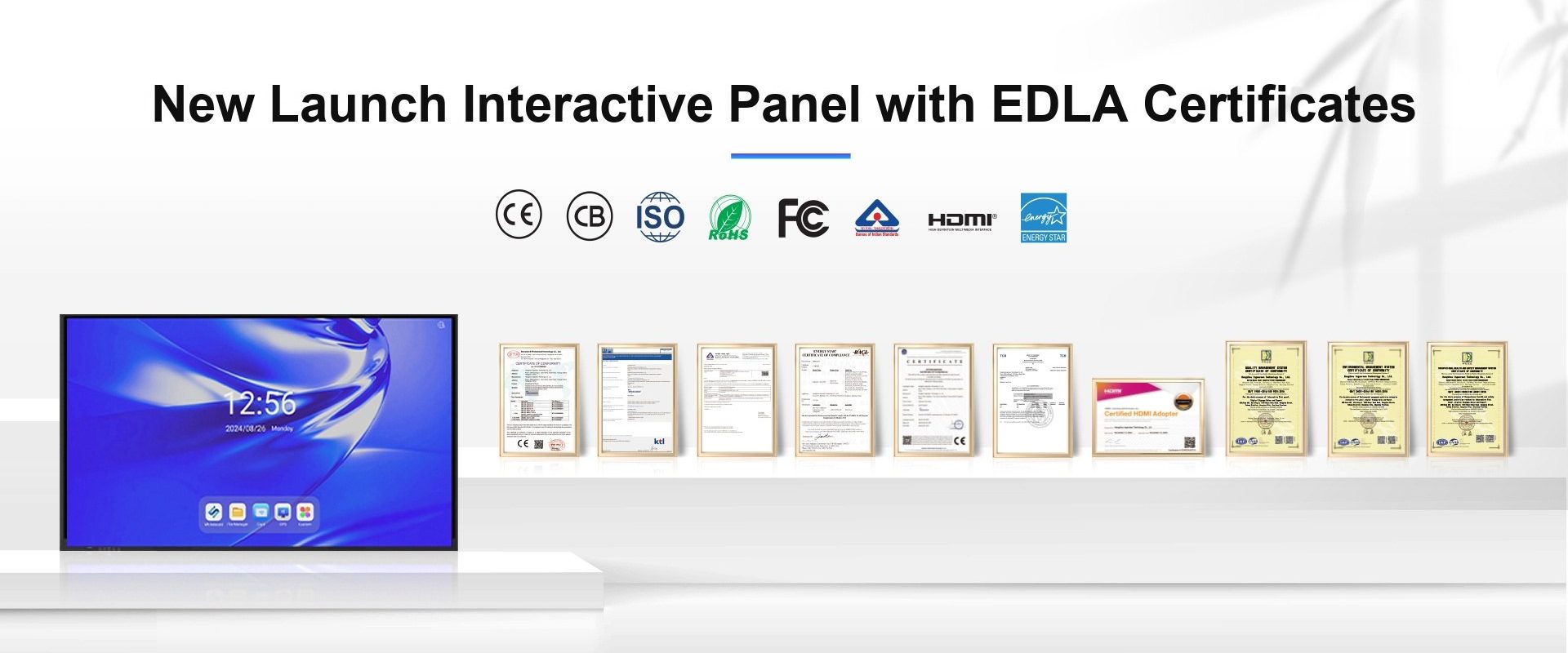
CE, FCC and RoHS are baseline requirements for most markets. Ask for the certificate numbers and the test reports, not just the logos on the website. For medical, automotive or outdoor projects, additional standards may apply.
5. Request a sample and test it in your environment
A sample is the cheapest risk reduction available. Test the touch accuracy at the edges, the brightness in your lighting, the operating temperature, the interface compatibility and the enclosure fit. A supplier that refuses a single-piece sample order is not set up for export projects.
6. Check the engineering capability
Ask how custom sizes, interfaces, firmware and logos are handled. A factory with in-house engineering can answer with a drawing, a 3D model and a timeline. A trader will forward the question and come back with a generic answer.
7. Confirm the lifecycle and spare-parts policy
Industrial projects run for years. Ask how long the LCD, touch controller and board will be available, what happens if a component is discontinued, and whether spare parts can be supplied after the warranty period.
8. Understand the commercial terms
| Item | What to confirm |
|---|---|
| MOQ | Is one piece accepted? Is the price the same as the factory price? |
| Sample lead time | Standard sizes vs custom sizes |
| Production lead time | 100 pcs and 500 pcs |
| Payment terms | Deposit, balance, accepted methods |
| Incoterms | EXW, FOB, CIF, DDP |
| Warranty | Duration, coverage, spare-parts terms |
| Packaging | Export carton, foam, pallet, private label |
9. Ask for references in your market
A supplier with experience in your region will understand the certification, voltage, language and logistics requirements. Ask for two or three references, or at least for examples of projects similar to yours.
10. Visit the factory if the order is significant
A factory visit is the most reliable audit. Look at the production line, the test equipment, the incoming material area and the quality records. Talk to the engineers, not only the sales team. If travel is not possible, ask for a live video audit and a sample from current production.
Red flags
- No factory address, only an office or a virtual address.
- Prices far below the market without a clear explanation.
- Certificates that cannot be verified.
- No engineering contact, only a sales chat.
- Refusal to provide a sample or a test report.
- Product photos that appear on many different suppliers’ websites.
How Seabird works with new buyers
We are a factory-direct manufacturer in Huizhou, Guangdong, founded in 2011. We produce panel PCs, industrial monitors, box PCs and OPS modules, touch frames and overlays, interactive flat panels and rugged tablets. We accept one-piece sample orders at factory price and welcome factory audits.
Send us your specification and target market. We will reply with a drawing, a compliance list, a sample plan and a factory price within 24 hours on working days.
Frequently asked questions
How do I verify that a Chinese supplier is a real factory?
Ask for the business licence, the factory address, a live video call from the production floor and a sample from current production. A factory visit is the strongest verification.
What certifications should a touch display supplier have?
CE, FCC and RoHS are the baseline for most export markets. ISO 9001 is a useful indicator of quality management. Medical and automotive projects may require additional standards.
Is a one-piece order possible?
At Seabird, yes. One piece is still factory price, and larger quantities receive a volume discount.
What is a typical lead time?
Standard sizes: about three days for samples, seven days for 100 pieces and fifteen days for 500 pieces. Custom sizes are quoted individually.