
Industrial automation is becoming software-defined — and the hardware has to keep up
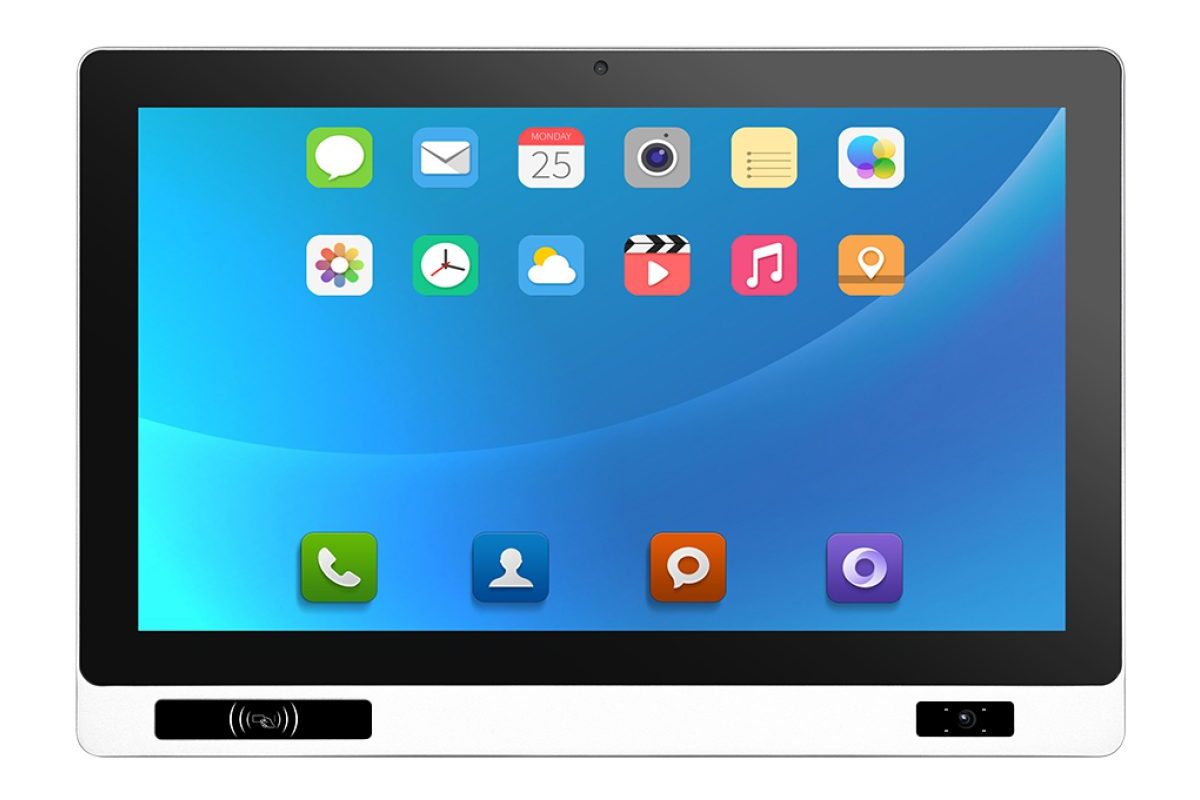
Automation used to be a PLC, a sensor and a fixed-function HMI. In 2026 it is a network of machines, sensors, cameras and software models running close to the production line. The panel on the machine is no longer just a display; it is the point where the physical and digital worlds meet.
This shift is changing the requirements for industrial computers, and it is creating opportunities for manufacturers that can combine touch, compute and thermal engineering in one enclosure.
Why edge AI is moving into the panel
Cloud AI is not suitable for every task. Latency, bandwidth, data sovereignty and uptime all argue for processing at the edge. A camera inspecting a weld, a model counting people in a retail aisle or an algorithm detecting an anomaly in a motor can run locally on a panel PC or a box PC.
The hardware needed is now available at reasonable cost: Intel Core Ultra and N-series processors with integrated NPUs, AMD Ryzen embedded platforms, Rockchip RK3588-class ARM SoCs and NVIDIA Jetson modules. A fanless panel PC can run a vision model, a dashboard and a database without a fan, which matters in a dusty factory.
Fanless design is no longer a compromise
Older fanless PCs were slow. Modern fanless designs use heat pipes, aluminium chassis and low-power processors to deliver enough performance for HMI, SCADA, vision and edge analytics. The benefits are practical:
- No fan to draw dust into the enclosure.
- No moving part to fail.
- Quieter operation in medical and office environments.
- Lower maintenance and longer service life.
Our fanless industrial box PCs and panel PCs are built around this approach, with wide voltage input and industrial I/O.
The interface is becoming multi-modal
Touch is still the primary interface, but it is increasingly combined with voice, vision, RFID, barcode scanning and gesture. In a warehouse, a worker may scan a parcel, confirm on a touch screen and speak a note. In a cleanroom, a gloved hand may use a capacitive screen while a camera reads a code.
This puts pressure on the display stack: the touch controller must work with gloves and wet fingers, the cover glass must resist chemicals, and the computer must have enough ports for scanners, cameras and sensors.
What this means for machine builders
- Standardise on a platform family. A panel PC, a box PC and a touch monitor from the same supplier reduce integration risk.
- Plan the I/O. RS232/RS485, Ethernet, GPIO, CAN bus and PoE are still essential in automation.
- Design for lifecycle. A machine may run for 10 years; the computer inside it must be available for most of that time.
- Separate compute from display. An OPS module or a box PC lets you upgrade performance without replacing the display.
- Document the thermal envelope. Fanless does not mean unlimited; the enclosure and ambient temperature must be specified.
Industries leading the change
| Industry | Edge AI use case | Hardware |
|---|---|---|
| Automotive | Vision inspection, robot guidance, traceability | Fanless box PC with GPU/NPU, industrial monitor |
| Electronics | AOI, defect classification, MES terminals | Panel PC, machine vision PC |
| Pharmaceutical | Serialisation, environmental monitoring, batch records | Stainless-steel panel PC, IP66 monitor |
| Food and beverage | Fill-level inspection, label verification, washdown terminals | IP69K monitor, stainless enclosure |
| Logistics | Dimensioning, sorting, fleet telematics | Rugged tablet, vehicle terminal |
| Energy | Predictive maintenance, load forecasting | Edge AI box PC, outdoor display |
The next five years
Three predictions are reasonable:
- Edge AI becomes standard in mid-range industrial PCs, not a premium option.
- Touch and vision converge in the same device, with cameras integrated into panel PCs for inspection and presence detection.
- Energy efficiency becomes a specification, driven by both cost and regulation.
For buyers, the practical response is to choose hardware with headroom: a processor one tier above today’s requirement, a thermal design that can handle a higher ambient temperature, and a supplier that can support the same platform for five years.
How Seabird supports automation projects
We build industrial panel PCs, fanless box PCs, industrial monitors and touch components for machine builders and system integrators. X86 and ARM platforms, Windows/Linux/Android, wide voltage input and industrial I/O are available as standard options.
Send us the application, the environment and the interface list. We will propose a configuration and provide a sample for validation.
Frequently asked questions
Can a fanless PC run AI workloads?
Yes, for edge inference. Fanless designs with low-power CPUs and NPUs can run vision and analytics models within a limited thermal envelope. Heavy training still belongs in the cloud or a GPU server.
What is the advantage of an edge AI PC over a cloud connection?
Lower latency, reduced bandwidth, better privacy and continued operation when the network is down.
Which processor should I choose for machine vision?
It depends on the model. Intel Core Ultra or a dedicated GPU/NPU is common for vision; ARM platforms are suitable for lighter inference and control tasks.