
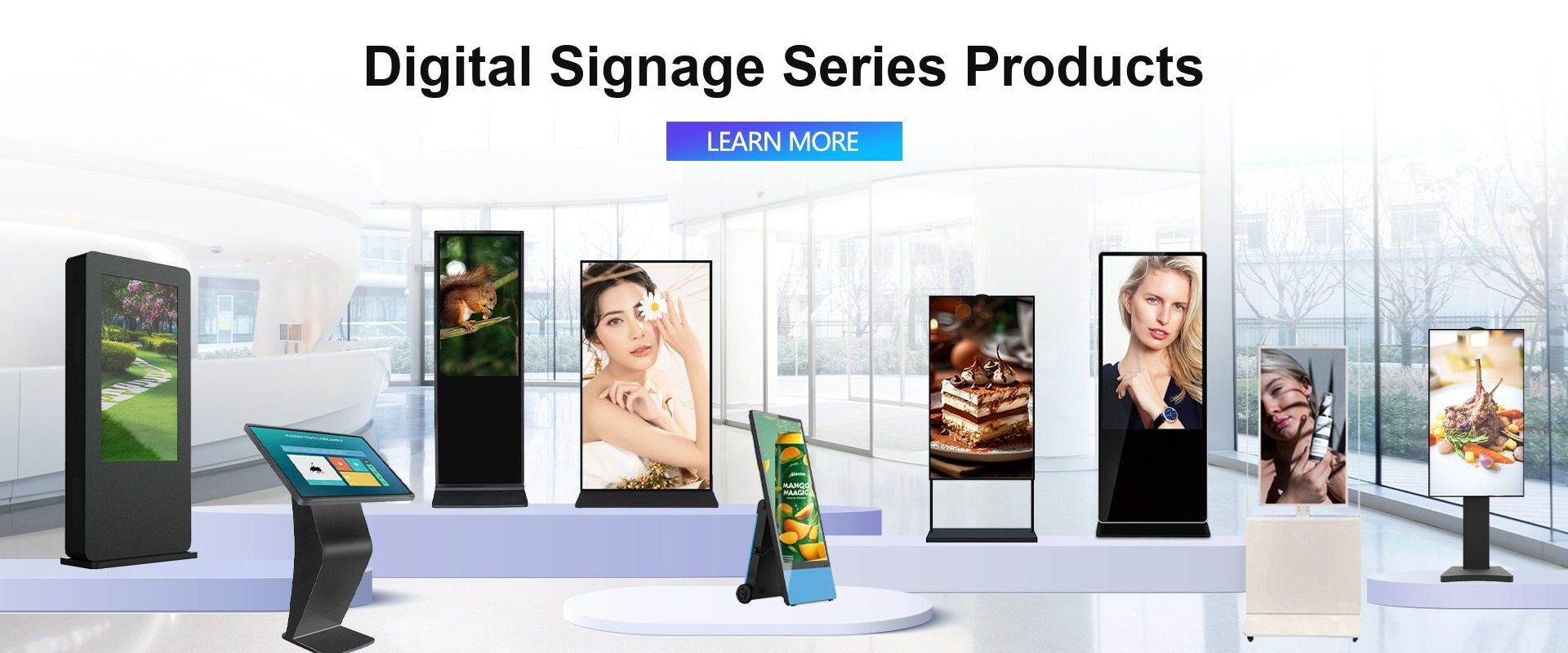
Why the industrial touch screen market is moving again
After two years of inventory correction, the industrial touch screen market is entering a new investment cycle. Factories are replacing ageing HMI terminals, retailers are rebuilding self-service counters, schools are refreshing classroom displays, and logistics operators are putting tablets and panel PCs into vehicles and warehouses. The common thread is not a new screen size or a faster processor — it is the expectation that every display is now a connected, intelligent terminal.
For buyers, the practical question is no longer “which touch technology is cheapest” but “which industrial touch screen will still be supported in five years”. This article summarises the trends we see from our factory floor in Huizhou and from the enquiries that reach our sales team every week.
The market in one page
| Segment | 2025 estimate | Forecast | Growth |
|---|---|---|---|
| Industrial PC market | USD 6.92 billion | USD 8.83 billion by 2030 | 5.0% CAGR |
| Digital signage market | USD 21.45 billion | USD 28.88 billion by 2030 | 6.1% CAGR |
| Interactive flat panel market | USD 9.9 billion | USD 21.8 billion by 2035 | 8.2% CAGR |
| Touch panel market | tens of billions | high single-digit growth to 2030 | varies by source |
Different research houses use different definitions, so treat the numbers as direction rather than precision. The direction is consistent: industrial and commercial touch hardware is growing faster than consumer electronics, and the centre of demand is shifting from simple monitors to complete touch computers.
Trend 1: AI moves from the cloud to the panel
The biggest change in 2026 is that AI is no longer a data-centre story only. Edge AI has reached the panel PC: Intel Core Ultra and N-series processors, Rockchip RK3588-class ARM platforms, and dedicated NPUs now make it practical to run vision inspection, people counting, licence-plate recognition, voice interfaces and predictive maintenance directly on a 10-inch to 32-inch industrial touch screen.
For system integrators this changes the bill of materials. A single fanless industrial touch panel PC can replace a display, a small box PC and a separate vision controller. For buyers, the checklist should include NPU performance, thermal design, and whether the supplier can keep the same board available for three to five years.
Trend 2: multi-touch is becoming a specification, not a feature
Ten-point touch was a premium feature five years ago. Today, 20-point and 40-point infrared frames are standard for education and collaboration, while 10-point projected capacitive touch is the baseline for industrial and commercial displays. The new requirements are glove operation, wet-finger tracking, palm rejection and pen-on-capacitive input.
This is visible in search demand: infrared touch frame and projected capacitive touch screen are among the most consistently searched terms in the category, and both are now expected to support multi-user interaction rather than a single operator.
Trend 3: larger formats keep expanding
The 32-inch, 43-inch, 55-inch, 65-inch and 86-inch sizes dominate buyer searches because they map directly to the most common installations: meeting rooms, retail windows, restaurant menu boards, hospital wayfinding, campus notice boards and factory dashboards. At the same time, the 7-inch to 15.6-inch segment is growing for embedded HMI, medical carts, access control and vehicle terminals.
A practical consequence is that suppliers must offer a size ladder rather than a single model. Seabird covers 7-inch to 32-inch panel PCs, 7-inch to 32-inch industrial monitors, 32-inch to 110-inch infrared touch frames, and 55-inch to 98-inch interactive flat panels, which lets a project start with one sample and scale without changing suppliers.
Trend 4: Android and Windows are converging in the same enclosure
Buyers no longer want to choose a platform at the hardware stage. They want an Android panel PC for kiosks and digital signage, a Windows panel PC for MES, SCADA and machine vision, and the option to swap an OPS module later. The OPS (Open Pluggable Specification) form factor is the practical answer: the display stays installed, and the computing module is upgraded independently.
That is why OPS PC modules have become a stable, low-competition search category. A display with an OPS slot protects the customer’s investment and gives the integrator a clear upgrade path.
Trend 5: outdoor and high-brightness demand is rising
Digital out-of-home advertising, EV charging stations, bus shelters, drive-throughs and smart-city wayfinding all need displays that remain readable in direct sunlight. The specification language is consistent: 1,000 to 2,500 nits, anti-glare or optical bonding, IP65 or IP66 sealing, wide-temperature operation and fanless thermal design.
This is a segment where cheap consumer panels fail quickly. Buyers should ask for brightness measured on the finished unit, not the bare LCD, and for a bonding method that prevents condensation and fogging.
Trend 6: supply chains are becoming regional, but China remains the engineering centre
Tariffs, local-content rules and delivery risk have pushed some assembly closer to the end market. In practice, most projects still source the touch stack, controller boards and panel PCs from China because the component ecosystem, tooling and engineering depth are concentrated there. The difference is that buyers now ask for dual-origin options, longer warranty terms and documented second-source plans.
For a factory like Seabird, this means more OEM and ODM work: custom logos, custom firmware, custom interfaces, private-label packaging and flexible MOQs. It also means more documentation — CE, FCC, RoHS, REACH, ISO 9001 and test reports are now part of the sales conversation, not an afterthought.
What this means for buyers in 2026
- Buy the platform, not just the screen. Ask how the compute module will be upgraded in three years.
- Specify the environment. IP rating, operating temperature, brightness and touch method should be written into the PO.
- Check the size ladder. A supplier that only has one size cannot support a rollout.
- Ask for a sample and a factory audit. A one-piece sample at factory price is the cheapest risk reduction available.
- Plan the software stack. Android, Windows 11 IoT, Linux and Ubuntu all have different driver and update implications.
Frequently asked questions
Is the industrial touch screen market still growing?
Yes. Industrial PC, digital signage and interactive flat panel forecasts all point to mid-single-digit to high-single-digit annual growth through 2030, with interactive displays growing fastest.
Which touch technology is growing fastest?
Projected capacitive touch is growing fastest in the 7-inch to 32-inch range because it supports multi-touch, glove and pen input with a sealed front surface. Infrared remains dominant above 43 inches because it scales to large sizes at a lower cost per inch.
Should I choose Android or Windows for a new panel PC?
Choose Android for kiosks, signage, simple HMI and low-power installations. Choose Windows when you need MES, SCADA, machine vision, legacy software or a familiar IT management stack. An OPS slot lets you change the decision later.
Talk to a factory, not a catalogue
Seabird has manufactured touch displays in Huizhou, Guangdong since 2011. We build touch all-in-one PCs, industrial monitors, fanless box PCs, touch frames and overlays, and rugged tablets for customers in more than 120 countries.
Send us your size, environment, operating system and target quantity. We will reply with a specification, a drawing and a factory price — including for a single sample — within 24 hours on working days.
Sources
- Research and Markets, Industrial PC Market — Forecasts from 2025 to 2030.
- MarketsandMarkets, Digital Signage Market — Global Forecast to 2030.
- Market Research Future, Interactive Flat Panel Display Market — 2025 to 2035.
- Industry analyst estimates for the global touch panel market, 2025–2030.